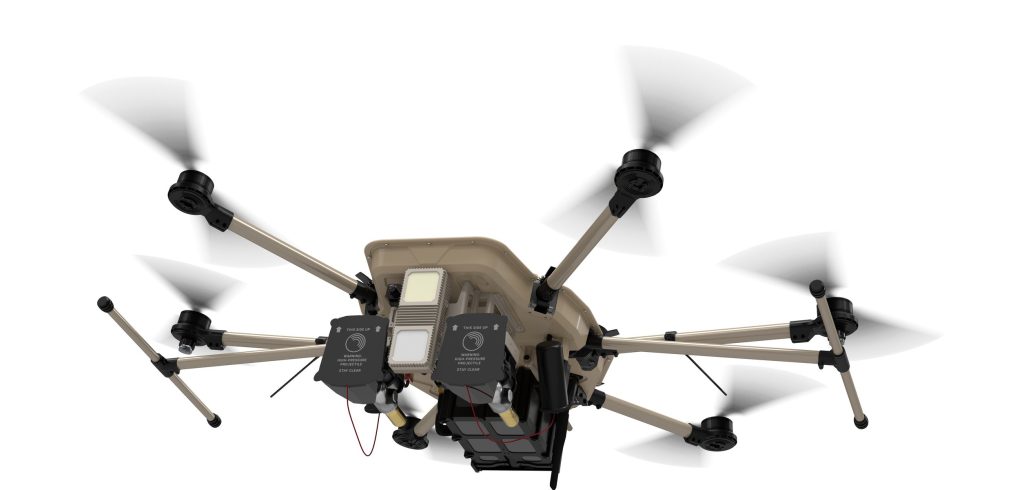
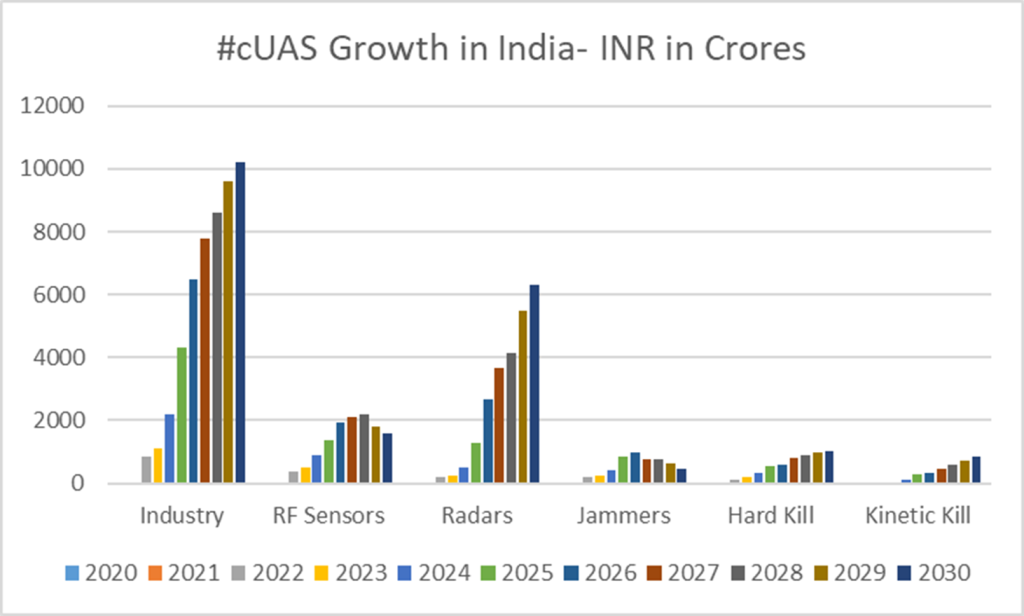
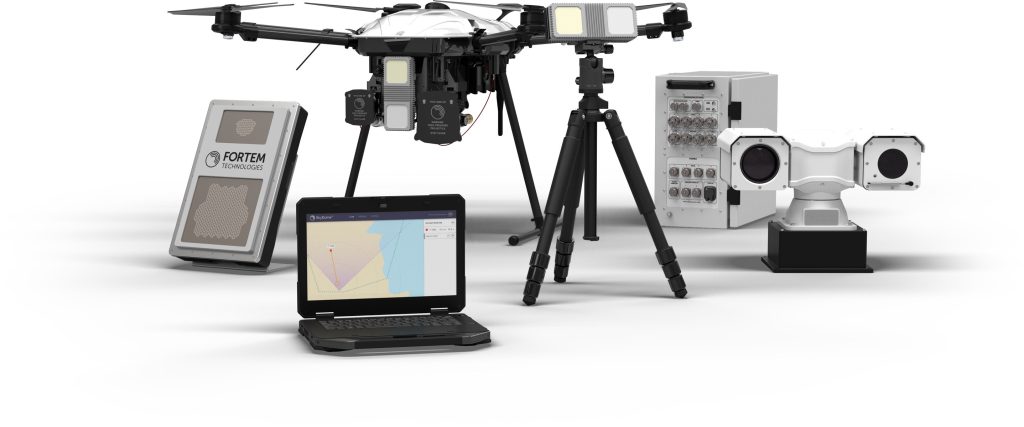
The current conflict in Ukraine has emerged as one of the biggest example as to how the technology can be repurposed to gain asymmetric advantage in the theatre of war, or so to say, alter the theatre itself. After their use in the Nagorno Karabach conflict and thereafter in the Aramco Attack and now in Ukraine-Russia War, the drones are seemingly becoming the biggest subject of intrigue. More than their legacy ISR roles their importance in the front lines has been felt in all together a different role. The use of commonly available commercial drones to deliver explosive payloads with near surgical precision in great numbers has nearly altered the perception about this threat vector. The ease of use, proliferation of the tech and the costs economics of rigging the drones for nefarious intent is both worrisome and an incentive for radical thinking in the development of the countermeasures. Gone are the days when even the most benign drone sightings can ever be ignored, if you see a drone in your part of the sky and cannot identify to be your own, the disaster could just be behind the corner; today, the adversary has capability to deliver artillery fire with exact precision and also enjoy the first person view of the harm they can inflict with help of small low cost drones, which we would have earlier brushed as toys! The moot question that now haunts every defence practitioner, is their inadequacy to counter this fast emerging aerial threat, which is getting away almost unchallenged; we have seen the simplest of the tech deployed in the famous low costs Shaheds is overwhelming the defences like never before. Most of us are ready to lose our sleep at the first reference of anything called swarm, however, the Robust all powerful Anti Drone solution seems to elude almost all of the governments across the globe.The art of countering the drone threats or the #cUAS is emerging as a whole new discipline and largely a work in progress. Most of the Antidrone solutions available in yester years were largely repurposed EW solutions; till the time the drone was dependent on the Pilot control, it was easy to Jam the control signals and force the drone to Return to the base, land at the location or hover for a while. With the capability to negate the GNSS navigational aids, even the autonomous UAVs could be somehow countered, however things are not same with the advent of 3G/4G/LTE and now 5G. The Counter Drone industry in India is quite young and most of the counter measures have so far been focussing on the Jammers. Though the jammers have been so far doing a great job, the newer generation of the drones have been successful to go past the barrier and conclude their missions. We have seen that the complex Air Defence complexes have themselves been targeted using the jammer location as the navigation tool! Even though these trends are very alarming and the threat vector gains strength from the fact that the newer navigation controls based in 3G/4G/5G band are both difficult to detect and jam, with the use of Inertial Navigation tools like Lidars and Optical Guidance make Jamming, Spoofing and Protocol Manipulation are seemingly losing their teeth. It must not otherwise mean that there are no real solutions against the drone attacks, the ones other than the jammers are not that simple nor so cheap and thus less common. In the above infographic, the Jammers shown in Red and the GPS/GNSS denial shown in pink, the advanced counter drone systems use Directed Energy weapons (DEW) like lasers shown in Yellow and HPM devices shown in Skyblue. Till the time these DEW tools like lasers and High Power Microwaves become affordable and easily available, their dominance in the counter UAS strategy is still quite a distant option. These Hard Kill options are currently both experimental and bulky, their use in the real theatres of war is quite promising, however, these weapons cannot be deployed in the urban spaces and during the peace time. When this deadly trouble is falling freely from the skies, and this asymmetric warfare needs to be contained somehow, the soldier on the ground can always deploy the weapons they have in hand, we have seen successful attempts to bring down the Pakistani drones by our own BSF, those sharp shooters are doing a good job. Giving them long range guns along with digital targeting aids shall be a good option. Use of missiles is another commonly counter attack practice, being reported in several battle zones. The missiles and rockets are both expensive and a very scarce resource, though these do become a primary tool, when the adversary has launched a frontal attack using bigger military drones, in the civilian space, the ballistics are not a preferred option, you need to match the response according to the size and the enormity of the threats. Recently the lasers emerged to be seen as the most promising, our very own DRDO has successfully deployed the laser weapons in the D4 system and it seems to be just a matter of time, when the bigger, yet deadlier version Kali5000 could be the game changer. The HPM-High Power Microwave option had so far suffered on account of their bulky format, lower power and operational ranges and very high cost. The announcements from another US based innovator Epirus puts their HPM unit-Leonidas amongst the most desired Anti-Drone tools. The “DroneCatchers” as these specialised drones are now being popularly called fill up the gap between the “Soft Kill” space, occupied by the Jammers and Spoofers and the “Hard Kill” options like Rockets, Missiles, Ballistics, Lasers and soon to come High Power Microwave devices. Day time PTZ cameras have evolved as an effective drone tracking tool but their use in autonomous drone detection is still circumspect due to the limitations with the technology and environmental conditions in several parts of North India. Despite their high costs, the